Clearing a severely cluttered flat differs from a normal house clearance in almost every respect: the volume, preparation, protective equipment, disposal and follow-up treatment.
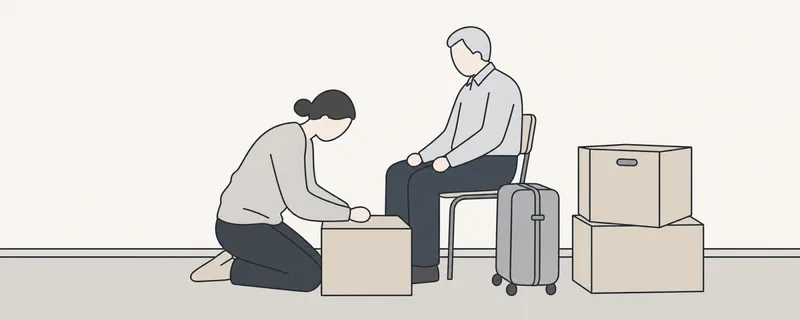
For relatives, the situation is also usually associated with shame. This should be taken into account when planning the clearance.
Severe clutter and compulsive hoarding are recognised conditions. They have nothing to do with character or lack of willpower. They are often associated with experiences of loss, depression, dementia or isolation. The clearance must therefore be handled differently.
When a clearance is considered a special case
Not every full flat is a special case. The relevant factors are:
- Blocked escape routes, passages that are only narrowly accessible, and doors that cannot be opened fully
- Layers of items that leave the floor out of sight
- Spoiled food, pest infestation or mould
- Faeces or urine, and defective or unused sanitary facilities
- Persistent odours that have penetrated textiles and the building fabric
- Structural damage caused by moisture or excessive loading of floors
From the third point onwards, protective equipment is mandatory, and relatives should not clear the property themselves.
Preparation
For occupational safety, we wear gloves, shoe covers and, depending on the situation, respiratory protection during the inspection.
We estimate the volume and proportions of different waste types. Cluttered flats contain a disproportionately large amount of residual waste, often with a high moisture content, and frequently hazardous waste such as medicines, chemicals, batteries and old paint.
We plan access: a skip or vehicle, a temporary parking restriction, carrying routes, and protection for the stairwell and lift. Where there is a strong odour, discretion depends greatly on how the cleared material is taken out of the building.
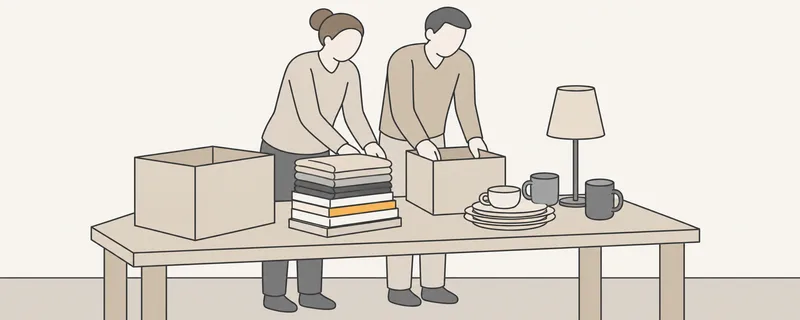
On request, we set aside any documents, letters and photographs we find and give them to you. We can also search specifically for items of personal importance. Before the clearance, tell us what to look for, such as particular keepsakes. Anything we find within the agreed scope is placed separately. We discuss the handover with you in advance.
We clarify who has authority to instruct us. An estate clearance requires a certificate of inheritance or an executor’s certificate. For a clearance during the person’s lifetime, we need express instructions from the affected person or their legal representative.
Authority to give instructions is particularly important.
If the affected person is still alive
Relatives sometimes commission a clearance without the affected person’s consent. This is legally sensitive and usually counterproductive on a personal level.
Without consent, no one may clear the property, whether a relative or a company. Anyone who empties a flat against the occupant’s wishes interferes with their rights, even if their intentions are good. The only exception is a deputyship with the appropriate mandate or an official order for the clearance.
Forced clearances rarely have a lasting effect. Studies and practical experience show that if a property is cleared without involving the person, it is often back in the same condition after six to eighteen months. Without support, the clearance changes the situation only temporarily.
It is better to involve specialist services. In the canton of Zurich, points of contact include the social services of the municipality where the person lives, Pro Senectute and the adult protection authorities. If residents or neighbours are in immediate danger, the relevant authority is the Child and Adult Protection Authority (KESB). These bodies know the procedures and can plan a clearance so that the result is sustainable.
We clear occupied properties only with the affected person’s consent or under an official order. The work is worthwhile only under this condition.
Carrying out the clearance
The team wears protective equipment: disposable coveralls, cut-resistant gloves, safety footwear and, depending on the exposure, respiratory protection with a particulate filter. If there is a pest infestation, we arrange for treatment before the clearance. Otherwise, the pests may spread through the building.
We clear the property layer by layer, working inwards from the door and starting with the escape routes. On request, we check each layer for items of interest before disposal.
We separate residual waste, cardboard, metal, electrical appliances and hazardous waste on site. This reduces disposal costs considerably because mixed waste is the most expensive category.
We take photographs before work begins, after the clearance and after cleaning. For estates with several heirs, this documentation is part of our standard procedure.
Follow-up treatment
After the clearance, the flat is empty but rarely ready to hand over.
This is followed by a thorough cleaning of all surfaces, often more than once.
Where there is organic contamination, we disinfect using products approved for indoor use.
Odour treatment is the most involved part. Odours penetrate wallpaper, floor coverings, screed and wood. Depending on the severity, treatment may require repeated cleaning, ozone treatment of the empty room, sealing coats of paint and, in extreme cases, the removal of floor coverings and wallpaper.
We undertake minor repairs if the property management company requires them and the tenant is legally responsible for them.
During and after ozone treatment, the room must remain closed off and must then be ventilated thoroughly. Allow additional days for this.
Discretion in practice
For many relatives, discretion is the main concern. Specific measures are rarely mentioned. These can help:
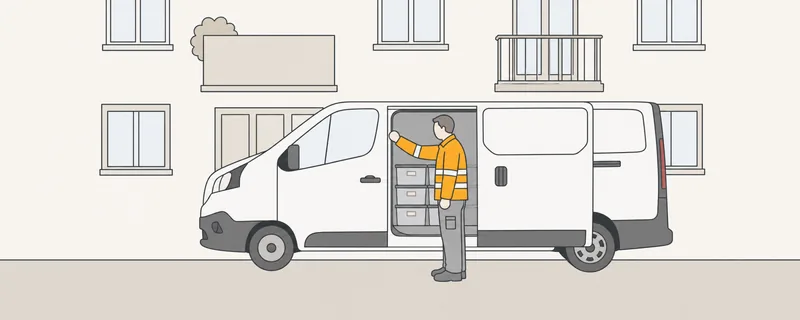
- An unmarked vehicle. Using a van without a company logo makes the clearance look like a normal move. We can provide this on request.
- Closed containers. Any open skips required outside the building are covered.
- Quieter times. On request, we work early in the morning or late in the afternoon, outside the times when the stairwell is busy.
- No conversations in the stairwell. Our teams do not discuss the job with anyone in the building.
- One contact person provides information to the property management company, so that several people do not give different answers.
- No photographs in case studies. We do not use photographs of properties from our jobs for advertising, even in anonymised form.
On request, we inform the neighbours in advance about a “move”. This helps prevent questions and is more effective than saying nothing.
Costs
A cluttered flat cannot be assessed by phone or from photographs alone. We visit the property, go as far inside as is safely possible, and then provide a fixed price in our quotation.
We list odour treatment and disinfection separately in the quotation. The extent of this work often becomes clear only once the flat is empty and we can see how deeply the floors and walls have been affected.
An allowance for valuable items is rarely possible in cluttered properties, but it is not ruled out. We still inspect the items and occasionally find something valuable.
For property management companies
For cluttered rental properties, clearance without legal authority is not permitted, even where the impact is considerable. The process involves a formal warning, extraordinary termination and, if necessary, eviction proceedings.
Where there is immediate danger involving fire risk, structural safety or hygiene affecting other flats, the fire safety authority and public health authority are responsible. We accept instructions from property management companies on presentation of the relevant legal authority and comply with official requirements.
Common questions on this topic
How much does it cost to clear a hoarded flat?
Will the neighbours notice anything?
Your question is not here? Call us: 076 606 22 83.