Anyone who pays for a flat clearance after a death has the invoice and may wonder whether the tax office will contribute to the cost. The answer has two parts. For inheritance tax, yes, because the clearance is a debt of the estate. For the heirs’ income tax, no, because it is treated as a private expense.
In between are questions that are regularly answered incorrectly in practice: to whom the invoice should be addressed, how the value offset belongs in the estate distribution, and what is different when inherited property is involved.
Clearance costs are debts of the estate
On death, the deceased’s assets and debts pass to the heirs. The debts include the deceased’s outstanding invoices and loans, as well as taxes that have not yet been assessed. There are also costs that arise only because of the death: the funeral, death notice, gravestone, execution of the will, inventory, and clearance and cleaning of the home. Tax law calls this second group debts arising from the succession (Erbgangsschulden).
Debts arising from the succession are deducted from the estate before the remainder is divided among the heirs. The clearance costs therefore also reduce the taxable estate.
Clearance forms part of the cost of administering the estate because it is unavoidable. A rented flat must be handed back empty, and a house must be cleared before it is sold. Tax offices therefore usually accept the invoice as an estate liability. Only the cantonal tax office can make a binding decision in each individual case.
Inheritance tax in the canton of Zurich
The canton of Zurich charges inheritance tax on the share received by each heir. Spouses, registered partners and descendants, meaning children and grandchildren, are exempt. For most families, the question of a deduction therefore does not arise because no tax is due.
Siblings, nieces and nephews, unmarried partners, godchildren or friends pay inheritance tax after an allowance has been deducted. The rate rises with the degree of kinship and the size of the inheritance. For distant relatives and unrelated people, the tax amounts to a substantial part of the inheritance.
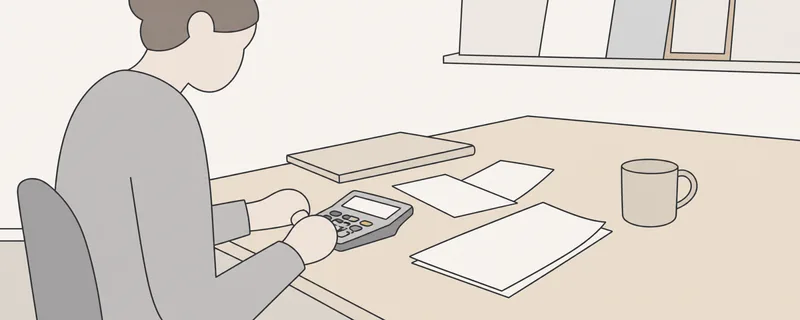
In these cases, every estate debt reduces the taxable estate. The full amount of the clearance invoice is deducted. The tax saving corresponds to the tax rate applied to that amount.
The assessment is based on the inventory prepared in the canton of Zurich after a death and on the information provided by the heirs. If the clearance invoice arrives only after the inventory has been prepared, submit it later with a brief note. Debts arising from the succession arise after the death. An invoice dated several months later does not prevent the deduction.
Heirs cannot deduct clearance from income tax
If you pay for the clearance yourself, you cannot deduct the amount on your own tax return. Clearance costs are treated as private living expenses. The Federal Act on Direct Federal Tax (DBG) lists such expenditure among non-deductible costs (Art. 34 DBG). Cantonal tax laws treat it in the same way.
A tax deduction is still unavailable if only one heir advances payment of the invoice. The advance is a claim against the estate. Anyone who pays on behalf of the community of heirs (Erbengemeinschaft) is reimbursed during the estate distribution.
It is also not possible to deduct the cost as an employment expense or a wealth management expense. Clearing a home in which the deceased lived does not serve to generate income.
Special case: property before a sale
An exception may arise if the estate includes a house or owner-occupied flat and the heirs sell this property. Property gains tax is due on the gain. In the canton of Zurich, it is levied by the municipalities. The taxable amount is the difference between the sale proceeds and the allowable property costs.
In the canton of Zurich, allowable property costs include the previous purchase price, value-enhancing investments, standard estate agent’s commissions and advertising costs, as well as charges on the transfer of ownership. Clearance costs are not on this list. The municipal tax office decides whether clearance that makes the sale possible will be accepted as a selling expense. Practice differs between municipalities and cantons.
Keep the clearance invoice with the other sale documents and declare it on the property gains tax return with a brief explanation. If it is disallowed, you have lost nothing. If it is accepted, the tax falls by the tax rate applied to the amount. If in doubt, ask the municipal tax office or your fiduciary adviser before the sale.
To whom the invoice should be addressed
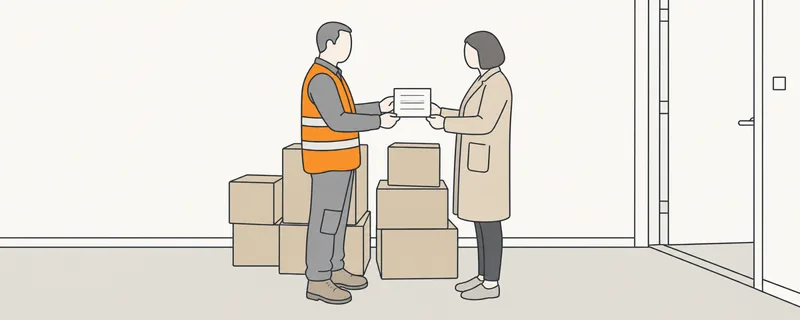
The invoice must link the clearance costs to the estate. You should therefore have the quotation and invoice made out to the community of heirs: “Community of heirs of [name of deceased], c/o [name and address of contact person]”. Payment is made from the estate assets or by an heir who advances the amount.
An invoice made out privately to a son or sister is harder to attribute for tax purposes and leads to discussions during the estate distribution. A brief note by telephone is enough to ensure that it is issued correctly.
If the accounts are frozen, banks will often release money for funeral and housing costs when presented with the invoice. Ask about this before an heir advances private funds. Anyone who nevertheless advances payment should retain the quotation, order and proof of payment, and obtain the written consent of the other heirs. → Community of heirs and clearance: who decides and who pays
In our quotations, the community of heirs is named as the client as soon as you give us the name of the deceased and the contact address. The items are broken down so that the tax office and the other heirs can see what was paid for. The price overview explains what a fixed price after an inspection includes.
The value offset belongs in the estate distribution
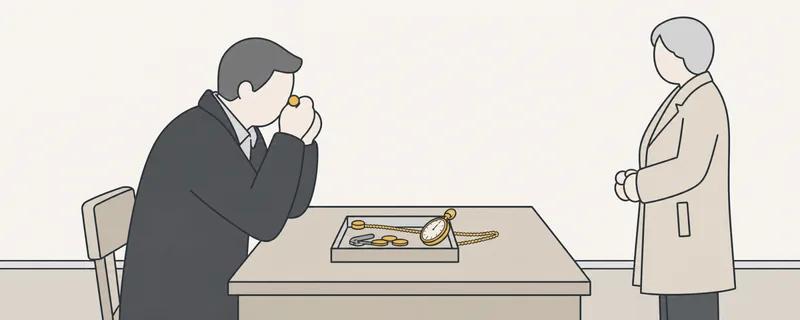
If the clearance company takes saleable items and deducts their estimated value from the invoice, this also reduces the estate. The credited furniture or watches leave the estate at their estimated value.
If the quotation shows the clearance amount and the value offset as a deduction, the invoice total is the difference. The community of heirs pays this amount, and it is this invoice total that is deductible for tax purposes. At the same time, the estate no longer contains the items used to offset the clearance cost. For inheritance tax, this makes no difference: the estate is reduced by the invoice and also by the items handed over, both of which reduce the basis of assessment.
The offset is relevant to the estate distribution. A co-heir who wanted to keep the display cabinet or considers the estimated value too low must be able to understand which items were credited and at what value. Add the quotation showing the quantified offset to the estate records and obtain the consent of all heirs before the clearance. The value offset page provides an example.
Keep the supporting documents
The quotation, order, invoice, proof of payment and list of credited items should remain in the estate records for ten years. The tax office may request supporting documents, and co-heirs may request information. If property is involved, you may not need the invoice until years later, when it is sold.
Also ask the clearance company for disposal records if hazardous waste was generated. They show that the item on the invoice corresponds to work actually performed. → Estate documents: what to keep and what to destroy
Summary
| Tax | Effect of clearance costs |
|---|---|
| Inheritance tax (canton of Zurich) | A debt arising from the succession that reduces the taxable estate. Not relevant to spouses and descendants because they are exempt |
| Heirs’ income tax | No deduction, private expense |
| Property gains tax when the property is sold | No standard deduction. Acceptance as a selling expense may be possible depending on the municipality and canton. Ask beforehand |
If a community of heirs includes heirs who are liable for tax, include the clearance invoice in the inventory. Everyone else should retain it and account for it in the estate distribution.
This article provides general information and is not a substitute for tax or legal advice. The applicable rules are the Inheritance and Gift Tax Act and the Tax Act of the canton of Zurich, the Federal Act on Direct Federal Tax, and the practice of the relevant tax office. Ask the cantonal tax office, municipal tax office or a fiduciary adviser before relying on a deduction.
Common questions on this topic
Can I deduct flat clearance after a death from tax?
Are clearance costs estate debts?
Who pays inheritance tax in the canton of Zurich?
Your question is not here? Call us: 076 606 22 83.