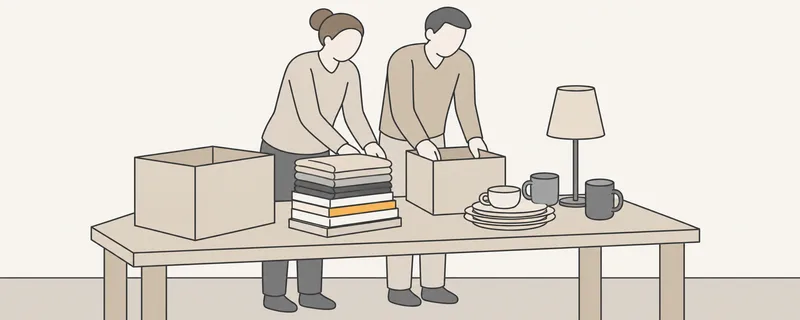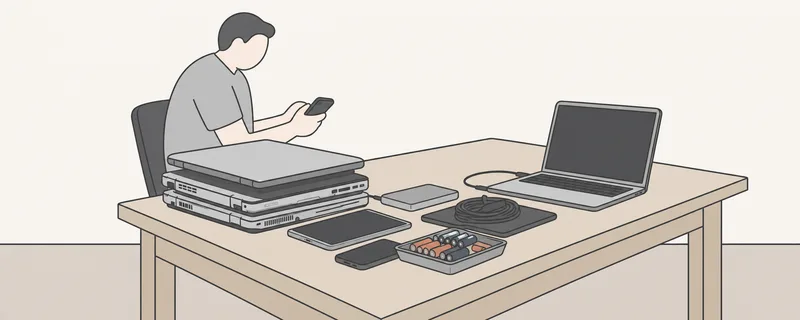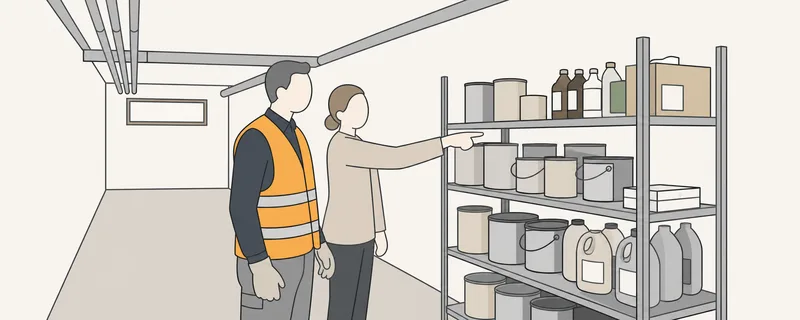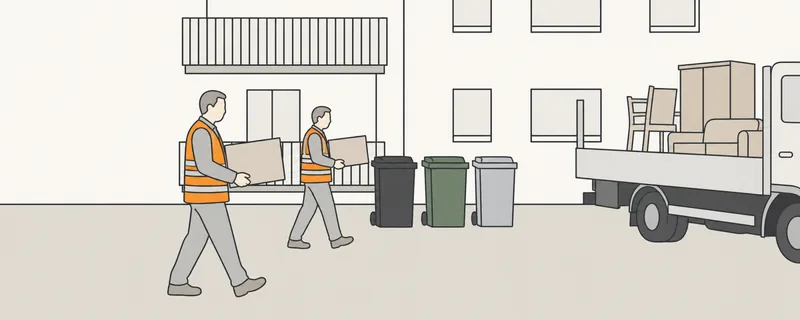
A flat clearance produces five to ten different types of waste. Sorting them properly accounts for a significant part of the disposal costs. Mixed waste is the most expensive category. This directly affects the clearance quotation.
The polluter-pays principle
Switzerland applies the polluter-pays principle. General waste is financed through chargeable refuse sacks or fee stickers, while recyclable materials are often financed through advance fees paid at the time of purchase. Sorting costs less.
During a clearance, each cubic metre of recyclable material costs less than a cubic metre of general waste.
The individual waste categories
Bulky waste
Anything that does not fit into a chargeable refuse sack and cannot be recycled: furniture, mattresses, carpets and large plastic items.
In the city of Zurich, bulky waste must have bulky-waste stickers attached and is collected on the published dates or taken directly to a disposal centre. In other municipalities, the municipal disposal centres determine the procedure. Systems vary, so check your municipality’s website.
For a clearance, the company handles this part and charges the disposal fees. Check whether these are included in the quotation or listed separately.
Electrical and electronic equipment
Disposal is at no charge because it has already been paid for through the advance recycling fee charged at purchase. Retailers must accept appliances and equipment of the types they sell, regardless of where they were bought.
This includes refrigerators, washing machines, cookers, televisions, computers, radios, telephones, lights, power tools and toys containing electronics.
Erase data storage devices first. Computers and smartphones contain personal data that should not leave the flat with the device.
Metal
Scrap metal has a material value and is accepted by recycling centres and scrap-metal dealers. For larger quantities, such as workshop contents, metal furniture or railings, a credit may be possible.
Cardboard, paper, glass, PET and aluminium
Paper and cardboard go to municipal collections and collection points. Clearances produce large quantities. Paper containing personal data should be securely destroyed, not placed with waste paper.
→ Estate documents: keep or destroy
Hazardous waste
Hazardous waste may only be disposed of through authorised collection points. Transport is governed by the Ordinance on Movements of Waste (VeVA).
Typical hazardous waste from households includes:
- Paint, varnish, thinners and solvents
- Used oil, brake fluid and antifreeze
- Plant protection products and pesticides
- Batteries and rechargeable batteries
- Fluorescent tubes and energy-saving lamps
- Chemicals of all kinds, including old photographic chemicals
- Fire extinguishers and compressed-gas cylinders
- Mercury thermometers
Retailers must take back hazardous waste from the types of products they sell. Larger quantities go to hazardous-waste collection points. In the canton of Zurich, cantonal authorities and municipalities provide information about locations and collection days.
Retailers accept medicines, sometimes for a fee. They belong neither in general waste nor in wastewater. Estates often contain several kilograms of them.
Particular care is required if asbestos is suspected. Buildings constructed before 1990 may contain materials with asbestos. If you suspect it, do not dismantle anything yourself. An assessment is required and, depending on the result, a specialist company. We then stop the clearance and investigate. Only in such cases might we have to cancel an appointment.
Building rubble and sanitary ceramics
These do not belong in general waste. Alterations reversed in rented flats, such as removing a floor installed by the tenant or a wall, produce building rubble that must be disposed of separately. It is charged by weight and is a frequently underestimated cost.
Textiles and shoes
Wearable clothing goes to collection schemes. Textiles that are no longer wearable are also recycled. Clothing collections accept them provided they are clean and dry.
We handle clothing from estates with care. Before handing it over, we check pockets and linings: cash and jewellery in clothing linings are among the most common finds.
Why sorting reduces the quotation
A sample calculation for a 4.5-room flat with 45 m³ of clearance material:
| Approach | Disposal component |
|---|---|
| Everything treated as mixed waste | 45 m³ at the highest rate |
| Sorted: metal, electrical equipment, cardboard, textiles and bulky waste | approx. 25 m³ of bulky waste, with the remainder cheaper or at no charge |
This is why we sort items in the flat and load each category separately.
A company that puts everything into one skip either charges more or does not dispose of it correctly.
Disposal records
Records are not required for private customers, but they can help you check the company. Before placing the order, ask which receipts or records it provides and have the answer included in the quotation.
Collection points that accept mixed categories often do not issue a record for each individual job. If you need evidence, state its intended purpose at an early stage.
What you can prepare yourself
If you have time before the clearance, this noticeably reduces costs:
- Gather hazardous waste together. One box containing paint, batteries and chemicals from the cellar and cleaning cupboard is sufficient.
- Collect medicines and take them to the pharmacy.
- Put small electrical appliances in a box for return at no charge.
- Set aside wearable clothing if you wish to donate it.
- Separate papers into “destroy” and “waste paper”.
This takes two to three hours, and the difference will be reflected in the quotation.
Common questions on this topic
What does it cost to dispose of electrical equipment in Switzerland?
Where should old paint, solvents and medicines go?
Your question is not here? Call us: 076 606 22 83.