A 3.5-room flat in which someone has lived for forty years contains 20 to 35 cubic metres of household contents. Most of it is disposed of. A small proportion has a market value, and an even smaller proportion is irreplaceable to the family. During a clearance, the household contents must be sorted: what goes where, and who decides?
Four routes for every item
During the inspection, we assign each item to one of four options. We first check whether something belongs with the family, then whether it can be sold, and then whether a charity shop (Brocki) will accept it. Only after that do we establish how it should be disposed of.
| Route | What goes there | Who decides |
|---|---|---|
| Keep | Photographs, letters, documents, keepsakes, and furniture and objects that family members will take | The heirs, before the clearance |
| Sell and credit | Watches, jewellery, designer furniture, solid wood, rugs, tools, collections | The heirs, based on the valuation in the quotation |
| Donate and charity shop | Well-preserved furniture, crockery, clothes, lamps, household appliances | The clearance company, after consultation |
| Dispose of | Bulky waste, defective appliances, hazardous waste, textiles with no recipient | The clearance company, separated by waste category |
The first row is the most important and the one most often skipped. Anyone who arranges an inspection of the flat before the family has reviewed everything leaves decisions about keepsakes to a stranger.
Route 1: Keep, and the keepsake box
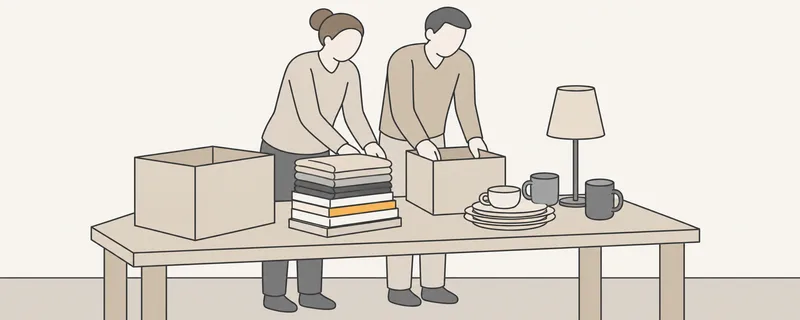
Before the clearance, family members go through the flat and mark what is to remain. If there are several heirs, it is advisable to make the selection together so that no one can later say they did not see something. We exclude marked items from the calculation, list them in the quotation and leave them in place on the clearance day.
What is not on a shelf is almost always overlooked: photographs in shoe boxes, letters beneath drawer bottoms, diaries behind books, and certificates in files among electricity bills. These items emerge only during the clearance, when the family is no longer in the flat.
On request, we set aside any documents, letters and photographs we find and give them to you. You can arrange a search for other personally important items. Before the clearance, tell us what we should look for, such as a notebook. Anything we find within the agreed scope is placed separately in the keepsake box. We agree in advance who will receive it and when.
Also tell us which records you need. Before the clearance, we record which documents should be specifically sought and set aside separately. → Estate documents: what to keep and what to destroy
Route 2: Sell and credit
During the inspection, we value items with a market value and deduct the amount from the clearance costs. This value credit is stated in the quotation. You decide whether to leave the items with us or sell them yourself.
In practice, credit is given for mechanical wristwatches, gold and silver jewellery, design classics with documented provenance, solid-wood furniture in good condition, hand-knotted rugs, tools and machinery, and organised collections with a catalogue. Wall units, suites of upholstered furniture, everyday crockery and large quantities of books are not credited because there are no buyers for them.
We exclude anything we cannot assess, such as an unsigned painting or a coin collection, from the job and recommend a specialist valuation. The categories that do and do not have value are listed under What really has value in an estate.
Ricardo and tutti are two platforms suitable for selling items in Switzerland. Ricardo is suitable for items to be auctioned, while tutti is suitable for furniture that a buyer collects. For each item, you need photographs, a description and time to answer questions and arrange a collection appointment. Allow for some buyers not turning up. Ten items will take a weekend. An entire flat will take a month, which the notice period rarely allows.
Route 3: Donate and charity shop
Well-preserved furniture with no resale value belongs in a charity shop. The Zurich region has several large organisations, including the Salvation Army charity shops (brocki.ch), Brockiland and Arche Brockenhaus, as well as smaller neighbourhood charity shops and social enterprises.
Charity shops have to select carefully. They accept what they can sell within a reasonable time: clean upholstered furniture without stains, tables and chairs, chests of drawers, crockery, lamps, pictures, clothes, and books in small quantities. They reject items that no one has bought for years: wall units, old mattresses, cathode-ray tube televisions, encyclopaedias and scratched kitchen appliances. Some organisations collect larger pieces of furniture, usually by prior arrangement and with a waiting period. They reserve the right to reject items on site.
Collection by a charity shop is worthwhile if you have time and there are individual good-quality items. For a clearance with a deadline, we take suitable items there ourselves because charity shops’ collection times rarely fit within a notice period.
Clothes go to a clothing collection if they are clean and dry. Before handing them over, we check pockets and linings. Cash in coat pockets is one of the most common finds in estates.
Route 4: Dispose of, separated by waste category
What remains is separated in the flat and removed separately. Mixed waste is the most expensive. Each cubic metre of metal, cardboard or electrical waste costs less or nothing.
Bulky waste, meaning furniture, mattresses and rugs, is disposed of in the City of Zurich through ERZ Entsorgung + Recycling Zürich: at recycling centres, using bulky-waste labels for collection, or in small quantities at the Cargo-Tram. In the canton’s other municipalities, the municipal disposal centres regulate acceptance. The systems vary.
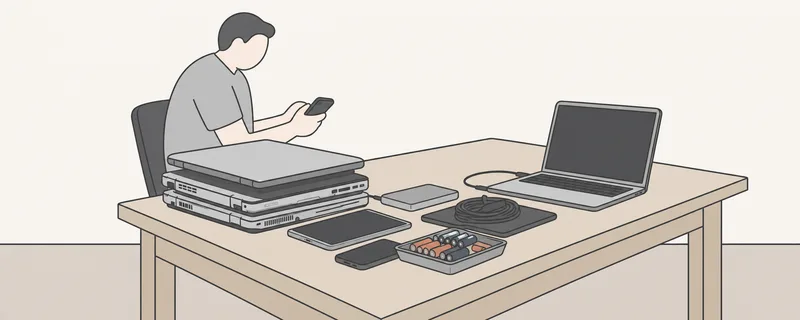
Electrical appliances are disposed of free of charge because disposal is paid for through the advance recycling fee charged at purchase. The SENS eRecycling take-back system for household appliances and lighting, and Swico Recycling for computers, consumer electronics and office electronics, accept appliances through retailers and collection points, regardless of where they were purchased. We give computers and telephones to you beforehand so that you can back up and delete the data.
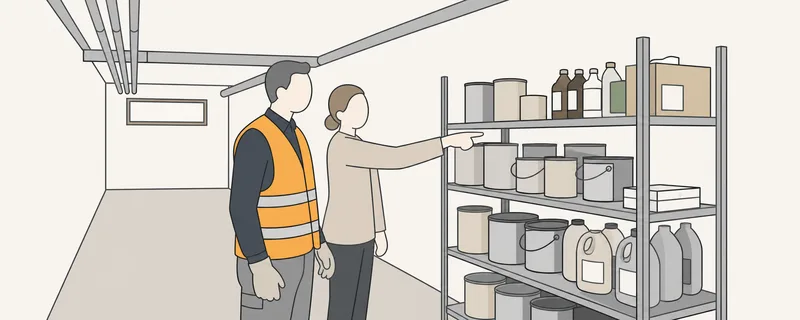
Hazardous waste, such as paints, solvents, used oil, batteries and fluorescent tubes, goes to collection points authorised to accept it. Pharmacies take back medicines. Paper containing personal data goes for confidential document destruction. It does not belong in waste-paper recycling. → Disposal in the canton of Zurich: what goes where
Anyone disposing of items without a clearance company can follow the same separation process. With our disposal and recycling service, it is included in the fixed price.
Photographic documentation before and after the clearance
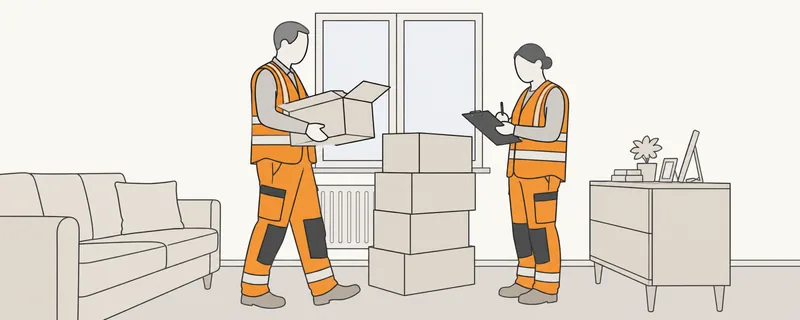
Before the first item leaves the flat, we photograph every room, except where names are visible. We photograph items included in the value credit individually before removing them. After the clearance, we take further photographs for the handover of the flat.
The photographs help the community of heirs (Erbengemeinschaft) if someone later asks what happened to the writing desk. For executors and property managers, they form part of the documentation we provide as standard.
Before contacting a company, you should also photograph every wall and every open cupboard yourself. This takes twenty minutes and provides a basis for any later discussion.
What you should sort yourself before the clearance
Two to three hours of preparation will reduce the price and protect what matters to you:
- Place photographs, letters, certificates and documents in a separate box before anyone else enters the flat
- Mark items that family members wish to keep with adhesive labels and names
- Gather watches, jewellery, coins and collections so that we can value them
- Put hazardous waste from the cellar and cleaning cupboard in a cardboard box
- Take medicines to the pharmacy
Everything else can remain where it is. During an estate clearance, we sort the household contents according to the four options. The inspection usually takes place within a few days, followed by a written fixed price. → Estate clearance in the canton of Zurich
General information based on clearance practice. For questions of inheritance law, such as who may dispose of the estate, this text is not a substitute for legal advice.
Common questions on this topic
What does a clearance company do with the furniture?
Do charity shops in Zurich accept furniture from a flat clearance?
What happens to photographs and letters during a clearance?
Your question is not here? Call us: 076 606 22 83.